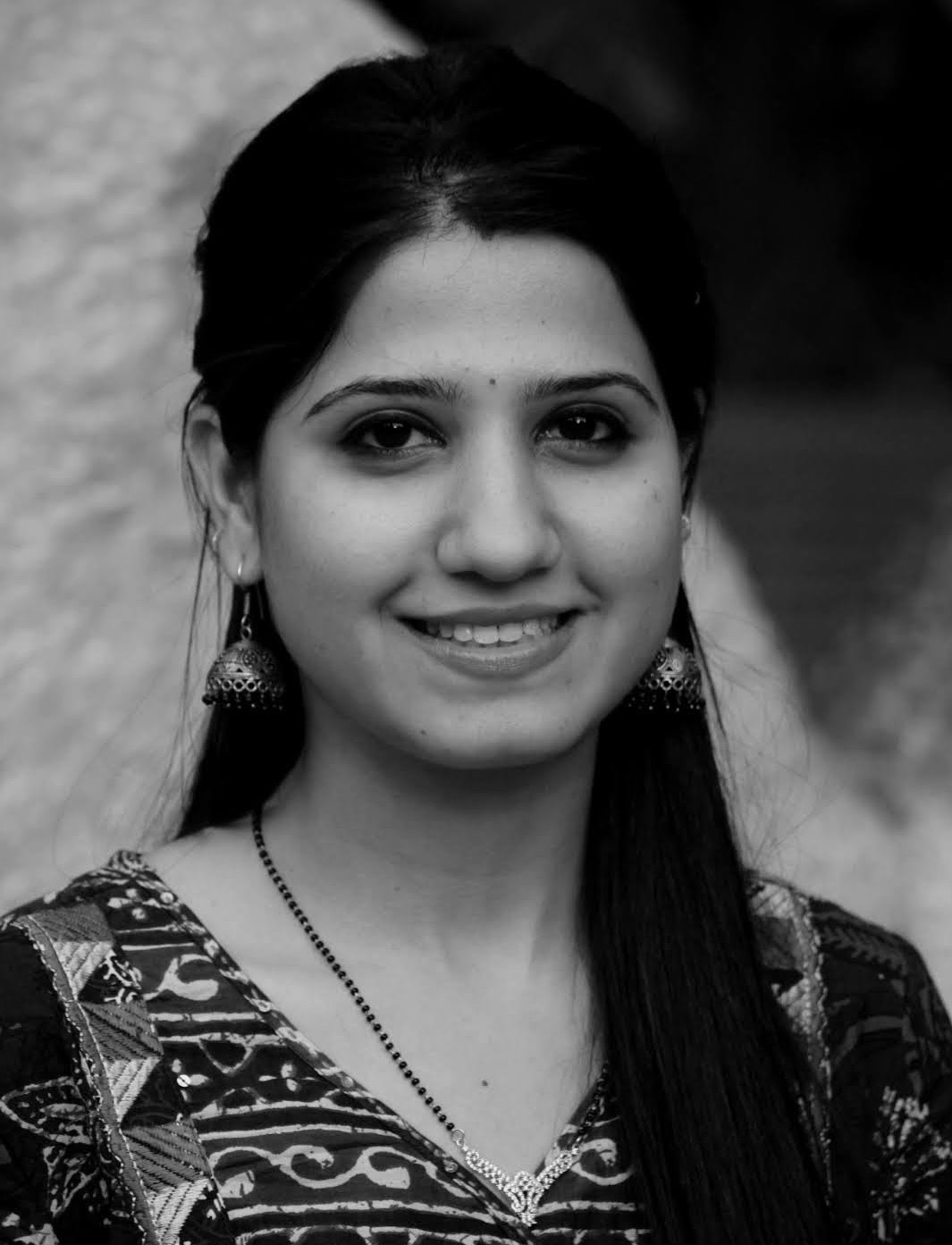
For Sangeeta Grover, painting is a space where memory, material, and emotion converge. Her practice, rooted in architectural forms and urban textures, gradually shifted from representation to abstraction—led by personal experience, meditative process, and a deep engagement with impermanence. Through layered surfaces, raw brushstrokes, and intuitive mark-making, Grover transforms the visible into the felt. In this interview, she speaks about her journey as an artist, her evolving visual language, and how abstraction became a way to hold silence, spontaneity, and meaning.
Q: How did you start in art?
Sangeeta: Art was always present at home, but it found direction through my training at the College of Art, New Delhi. I turned to visual language when words felt crowded—painting became a way to understand and express my inner world.
Q: Was it a gradual shift to abstract or a sudden one?
It was a slow, organic shift. My early works were architectural and representational, but after personal loss, I began to move inward—abstraction allowed me to express what realism could not: emotion, impermanence, and memory.
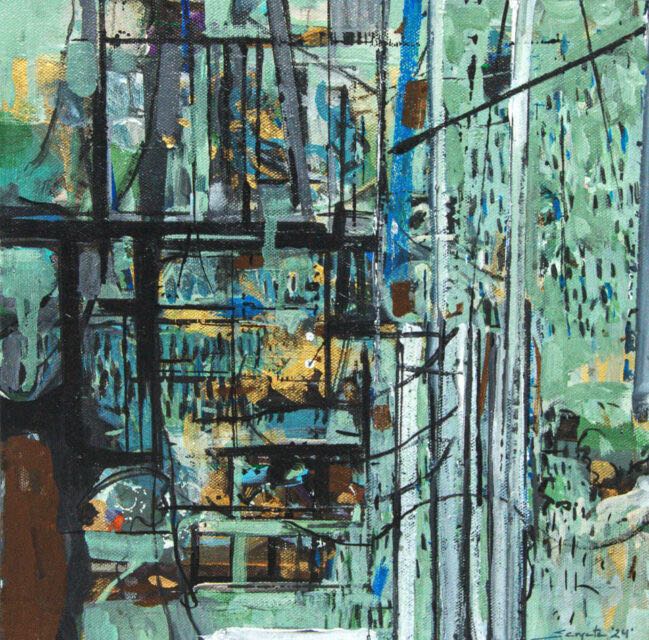
Acrylic on canvas
12 x 12 inches
2024
Q: How do you interpret what you see and turn it into abstraction?
I simplify observed forms—water tanks, tangled wires, stepwells—into lines, textures, and colour. They become abstracted fragments that hold memory and structure, not as they are, but as they feel.
Q: Why are movement, density, and tension important in your work?
They create rhythm and life on the canvas. Tension between stillness and motion, simplicity and detail, brings emotional presence to the surface.
Q: How is abstraction helpful for you or for the viewer?
Abstraction is like poetry—it reveals through suggestion, not explanation. The process itself is meditative and layered; for the viewer, it opens space for slow discovery.
Q: How have you evolved visually and conceptually?
My work has shifted from documenting the external to exploring the internal. Each layer reflects a deeper emotional and conceptual journey—rooted in impermanence and presence.
Q: What do you want the viewer to think or imagine?
I want them to notice the overlooked—the poetry in everyday architecture and textures. The work invites sensitivity, stillness, and reflection rather than answers.
Q: What are you working on now?
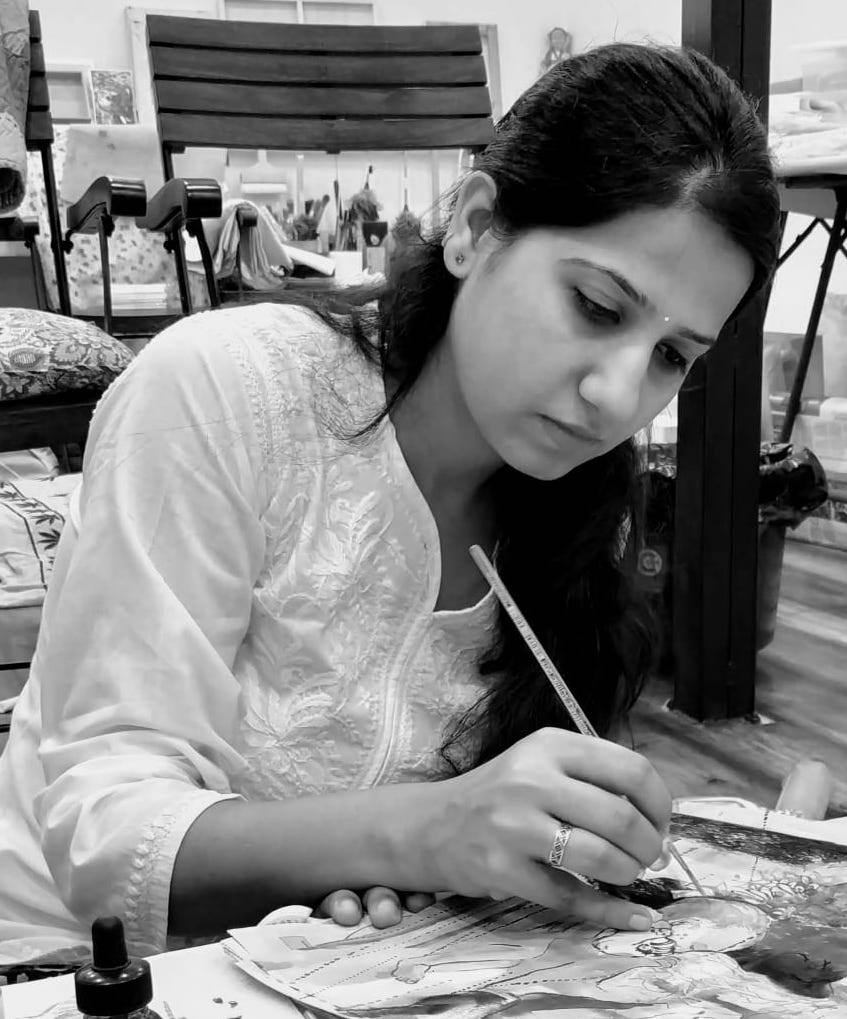
I’m exploring mixed media on canvas using charcoal, inks, and acrylics—experimenting with textures and spontaneity in process.
Q: What do you want to create that you haven’t yet?
I’m drawn to large, immersive works using unconventional materials—ceramics, thread, enamels—blending traditional techniques like block printing with contemporary approaches.